Social Mobility is a measure of change in social status. When an individual shifts from one social setting to another, some social mobility always happens. Actions like migration, marriage, education, employment etc lead to social mobility. However, it is not same as other similar sounding concepts like socio-economic development, GDP growth etc. Social mobility is always a measure of individual (or a small group placed in a similar situation) upliftment. Others are generally collective indicators. A fast growing economy may still have millions of poor. In India also, a section of population had been less socially mobile than others. When benefits of development are reaped unequally, differential mobility is witnessed. The fact that we still have a quarter of population below poverty is a reflection of that.
Showing posts with label Nitin Sangwan Cartoon. Show all posts
Tuesday, July 19, 2016
Tuesday, July 12, 2016
JOINT FAMILY
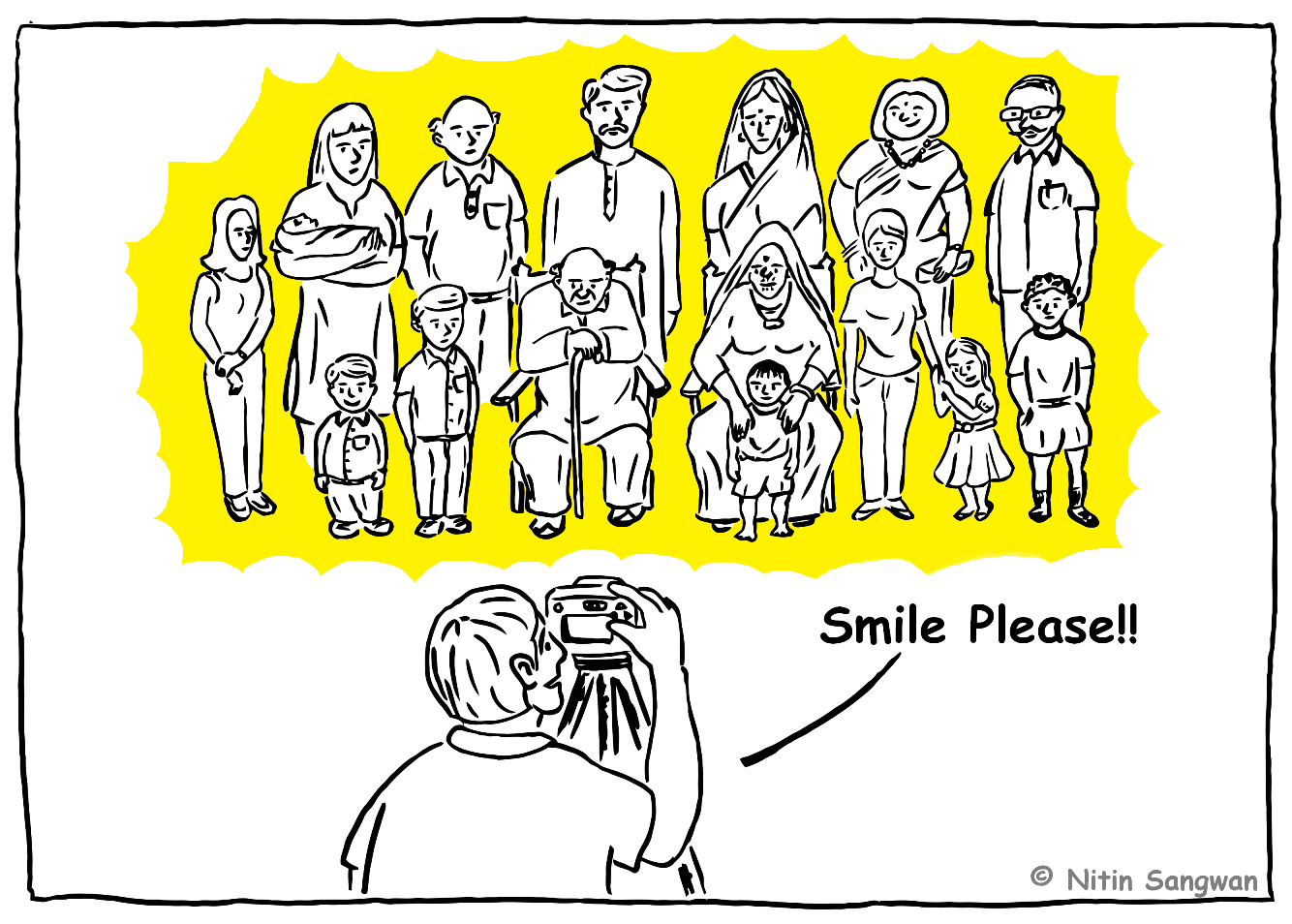
Joint family is an amazing place to live. Old timers see it as an idyllic place which is the cradle of social learning and emotional bonding. For kids it is a haven of fun with unlimited supply of love and care. Working spouses find a solace here as kids are taken care of by the elderly members. Elderly people in turn find meaning to their lives as they turn children again with the new members of the family. Away from this rosy picture, many feminists see the joint family as a noose around the freedom of the womenfolk of the house. In a patriarchal society like India, the burden of joint family falls unequally on the members of the family. Women are made to make compulsory sacrifices for the family. While every member strives for freedom and individuality, joint family sometimes imposes collective will on them. It creates conflict as well and joint family becomes a liability. Apart from economic causes, relationship management is a big challenge in maintaining the cohesiveness of a joint family or even a nuclear family for that matter.
Thursday, June 30, 2016
DEMOGRAPHIC DIVIDEND DILEMMA
Demographic dividend is often cited
as a panacea for the over-populated developing countries. It is often assumed
that the population is actually not a burden and the part of the population in
the working age group shall be productive and contribute towards economic
growth. This in turn will have domino effect on all socio-economic
developmental dimensions. Over-enthusiasts often project that a young
population of a billion will translate into a pair of billion working hands. However,
human beings are not machines. A billion young hands are not same as a billion
machines. All humans have different capabilities and sometimes these capabilities
have to be developed also. Education and skill development are two important
aspects of this development process which can transform the potential of
population into real tangible demographic dividend. Without doing so, the
potential demographic dividend may turn out to be a demographic burden instead as a billion pair of hands also come with a billion mouths to feed.
Behavioral dimension of the population has also become increasingly important.
Punjab is an example. If the behavior of the young population is allowed to go
awry, prospects of demographic dividend dim even further.
Subscribe to:
Posts (Atom)